A PSD or flow value is meaningful only with the test method, preparation, and acceptance rule.
Powder quality system
Specify the powder. Define the evidence.
A complete powder RFQ defines chemistry, particle-size method, powder behavior, sampling, packaging, traceability, and release documentation alongside price, availability, and lead time.
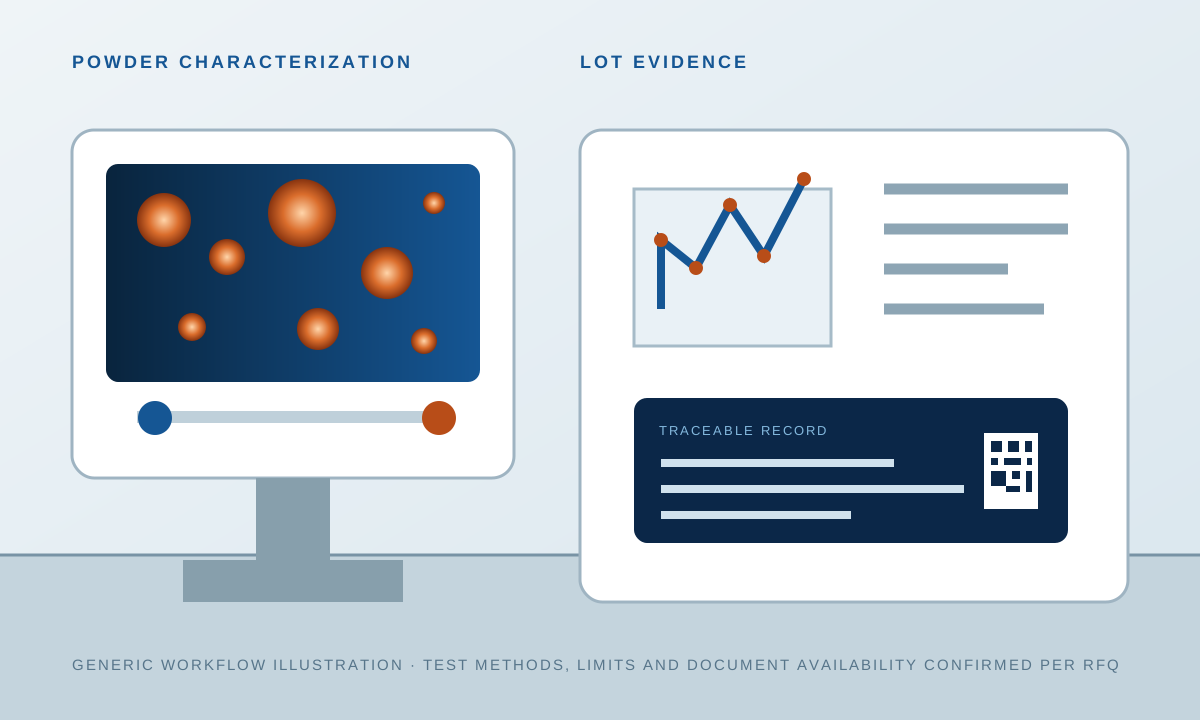 Illustrative powder-quality workflow
 Published typical data guides selection; the quoted lot and its documents control procurement.
Powder conformity does not replace machine, build, heat treatment, or finished-part qualification.
Six control layers
Turn broad supplier capability into a project-specific release plan.
The required depth depends on the alloy, process, application, qualification stage, and failure consequence. Not every document is automatically available for every route; scope is confirmed in the quotation.
Chemistry and interstitials
Grade, revision, target and maximum limits, restricted elements, oxygen, nitrogen, hydrogen, and sampling basis.
Particle-size distribution
Specified range, measurement method, sieve or distribution limits, sampling, and treatment of oversize or fines.
Morphology and defects
Sphericity, satellites, agglomerates, hollow particles, inclusions, surface condition, and evidence method.
Flow and density
Relevant flow test, apparent and tap density, conditioning, repeatability, and process-specific acceptance.
Lot traceability
Producer, manufacturing route, lot identity, blend restrictions, sample retention, reuse policy, and record linkage.
Packaging and logistics
Container size, atmosphere, moisture control, labeling, dangerous-goods review, destination, and storage instructions.
Test coverage
Connect each reported value to a method and release decision.
Quality-control capabilities may include the methods below. The quotation must still identify the actual lab, method, sampling basis, acceptance limit, production route, and lot for every required result.
Chemistry
ICP-OES, spark OES, O/N/H analysis, C/S analysis, and sample preparation
Release question Which standard, elements, interstitial limits, sampling basis, and lab report control acceptance?
PSD and morphology
Laser particle-size analysis, powder-image analysis, sphericity review, and optical microscopy
Release question Is acceptance based on sieve limits, D10/D50/D90, image statistics, or a customer method?
Powder behavior
Flow, apparent density, tap density, conditioning, and repeatability review
Release question Which test method and conditioning state correlate with the buyer’s feed and recoating system?
Material and coupon testing
Metallography, hardness, room/high-temperature tensile, and creep or rupture testing where scoped
Release question Are the machine, orientation, heat treatment, specimen, and test temperature explicitly linked?
Application validation
Build-coupon production, process development, heat treatment, post-processing, and small-batch part trials
Release question Is the evidence a powder-screening result or part of the customer’s qualified production route?
Batch control
Feedstock/bar review, process control, screening, powder tests, build validation, release, and retained records
Release question Can each result be traced to the proposed producer, route, lot, sample, document, and delivered container?
Candidate batch-control flow
- Feedstock or bar review
- Atomization process control
- Screening and classification
- Powder physical and chemical tests
- Scoped build validation
- Qualified release and record linkage
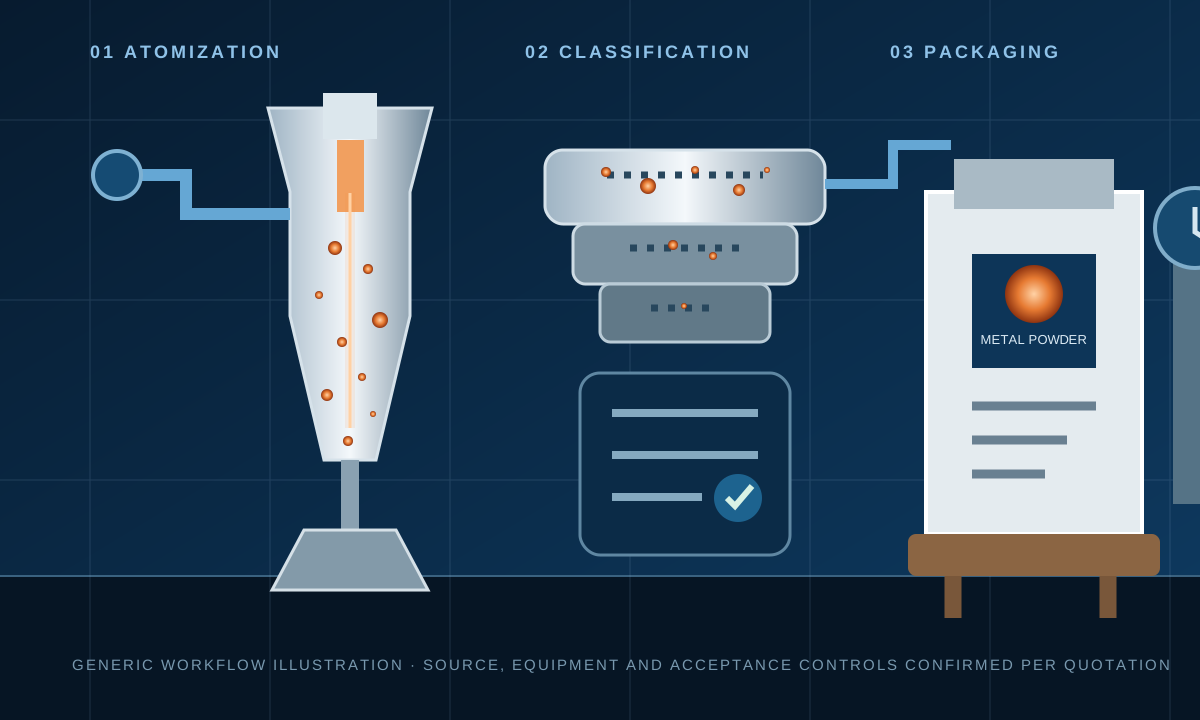 Generic workflow illustration · actual source and equipment confirmed per quote
 Evidence hierarchy
Use the right evidence at each procurement stage.
- Selection Public technical data
Useful for alloy and process screening; not a lot release.
- Quotation Source and specification confirmation
Defines the proposed producer, route, PSD, documents, packaging, lead time, and commercial boundary.
- Release Lot-linked evidence
COA and agreed reports support incoming acceptance for the delivered lot.
- Production Customer qualification record
Machine, build, post-process, inspection, and finished-part evidence remain with the responsible program.
RFQ document package
Ask for documents by decision purpose.
Lot-specific COA, chemistry, PSD, flow/density, label, and packing-list linkage as agreed.
Safety data, storage, grounding, fire risk, transport, and spill guidance appropriate to the material.
Sample reports, test methods, supplier questionnaires, change-notification needs, and retained sample plan where available.
Producer and route, quantity, packaging, Incoterm, destination, lead time, validity, and exclusions.
Make the acceptance boundary explicit